Why Choose a Centrifugal Fan for Your Application?
Why Choose a Centrifugal Fan for Your Application?
Selecting a fan is not merely a matter of comparing airflow numbers. A Centrifugal Fan must match the system’s pressure, temperature, space, and operating schedule. In a factory, this choice may determine whether dust reaches the filter or settles on a worker’s sleeve. In a commercial kitchen, it can influence heat removal, noise, and daily comfort.
David B. Bleier, author of the Fan Handbook, described the fan as “the heart of any air-moving system.” This practical observation remains valuable. A centrifugal design draws air into an impeller, turns it through the housing, and converts velocity into useful pressure. That geometry often suits duct systems with filters, bends, dampers, and long exhaust routes. It can also provide stable performance when resistance changes.
Real applications are rarely perfect. Ductwork may be undersized. Filters may become clogged. Motors may operate outside their best efficiency range. These details matter more than a brochure’s maximum airflow.
Small errors grow quickly.
A reliable selection process examines the duty point, fan curve, efficiency, sound level, maintenance access, and control method. Engineers should also verify the air’s moisture, dust load, corrosiveness, and temperature. A stainless-steel housing may be sensible in one process and unnecessary in another. Oversizing can create turbulence, wasted energy, and difficult balancing.
The right Centrifugal Fan is therefore not always the largest or fastest model. It is the model that performs consistently inside the real system. That judgment requires calculations, field experience, and a willingness to question initial assumptions. Sometimes, the first selection looks convincing. It may still be wrong.
What Is a Centrifugal Fan and How Does It Work?
What Is a Centrifugal Fan and How Does It Work?
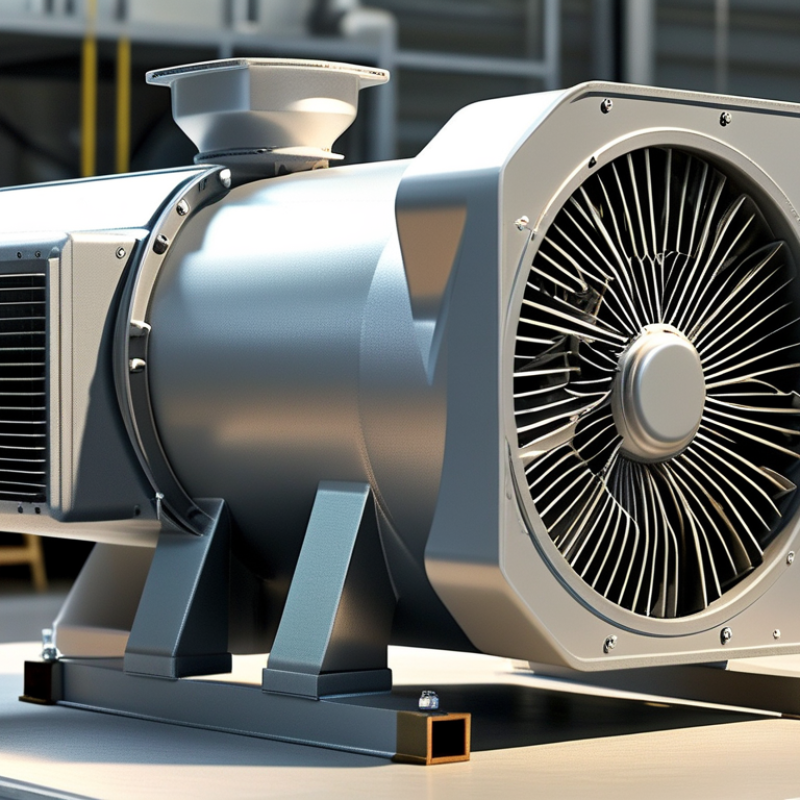
A centrifugal fan moves air through a rotating impeller. Air enters near the impeller’s center, called the inlet. The blades accelerate it outward by centrifugal force. A spiral housing then guides the air toward the discharge outlet. This housing also converts part of the air’s velocity into useful pressure.
This design suits systems with ducts, filters, coils, or other airflow resistance. It can maintain steadier airflow than many simple axial fans under pressure. Different blade shapes change efficiency, noise, and pressure performance. Forward-curved blades can move high air volumes, while backward-curved blades often provide better efficiency. Selection still depends on airflow, static pressure, temperature, and installation space. One detail is easy to miss: a powerful motor cannot fix an incorrectly sized fan.
Tips: Check the duty point before choosing the fan. Measure required airflow and static pressure together. Leave enough clearance around the inlet and outlet. Inspect filters regularly, because blockage increases pressure and energy use. Use vibration isolation when the fan operates near occupied areas.
In practical installations, airflow readings may differ from catalog values. Duct bends, leakage, and dirty components change real performance. Therefore, commissioning measurements deserve attention. A centrifugal fan may be reliable, but it is not automatically efficient. The best result comes from matching the impeller, motor, housing, and system resistance. Mistakes happen, especially when noise is considered too late.
Which Applications Benefit Most from Centrifugal Fan Design?
Why Choose a Centrifugal Fan for Your Application?
Centrifugal fans suit applications needing steady airflow against higher resistance. Their radial design works well with filters, ducts, coils, and process equipment. A workshop exhausting welding fumes may need airflow through a long, dirty duct. A centrifugal fan can maintain useful pressure as resistance rises. This matters in spray booths, commercial kitchens, cleanrooms, dust collectors, and HVAC air-handling units. The U.S. Department of Energy’s Improving Fan System Performance sourcebook reports potential energy savings of 20–50% in many fan systems through better sizing, controls, and system design. That figure is not automatic. Poor selection can erase it.
Industrial facilities often benefit when airflow changes during production. Variable-speed control can reduce fan power during quieter shifts or partial-load operation. The relationship is powerful: fan affinity laws show that power changes approximately with the cube of speed. Small speed reductions can therefore produce meaningful savings. The International Energy Agency’s The Future of Cooling reports that space-cooling energy demand could more than triple by 2050 without efficiency improvements. This increases pressure on designers to reduce avoidable air-moving energy. Still, a centrifugal fan is not always the best choice. Low-resistance ventilation may favor an axial design. Engineers should compare duty point, noise, temperature, particle loading, maintenance access, and motor efficiency. Real installations are messier than catalog curves. Rechecking airflow after commissioning is often overlooked.
How to Match Fan Pressure, Airflow, and System Resistance
Why Choose a Centrifugal Fan for Your Application?
How to Match Fan Pressure, Airflow, and System Resistance
A centrifugal fan suits applications where air must travel through ducts, filters, coils, or process equipment. Its rotating impeller converts motor power into airflow and pressure. The correct choice begins with measured requirements, not a catalog number.
Airflow describes the required volume, such as 8,000 cubic meters per hour. Pressure describes the resistance the fan must overcome. Add losses from elbows, dampers, filters, grilles, and height changes.
A clean filter may create little resistance, while a loaded filter can change the operating point significantly. That detail is often missed.
Use the system curve to compare resistance at different airflow rates. Then check the fan curve for a matching duty point. Select a fan that reaches the target airflow at the calculated total pressure. Static pressure may be enough for some ventilation systems, but total pressure is more reliable when velocity changes matter. Check fan speed, motor power, noise, temperature, and efficiency before approval.
In field work, I have seen fans selected only by airflow. The result was weak ventilation after ductwork installation. That mistake is expensive. Measure actual duct dimensions and estimate every major loss. Allow a modest design margin, but avoid excessive oversizing. Too much pressure can increase noise, energy use, and damper throttling. Testing should confirm airflow at the grilles, not only at the fan outlet. Real systems rarely behave perfectly. Recheck the assumptions.
What Factors Affect Centrifugal Fan Efficiency and Reliability?
A centrifugal fan suits many applications because it handles pressure changes with stable, predictable airflow. Yet efficiency depends on the complete system, not the fan alone. The U.S. Department of Energy’s Improving Fan System Performance sourcebook reports that optimized fan systems can often reduce energy use by 20% to 30%. Actual savings vary with duct resistance, control settings, and operating hours.
Operating near the design point matters. An oversized fan may run with a partly closed damper, wasting power as heat and noise. A variable-speed drive usually controls airflow more efficiently, because power demand can fall sharply as speed decreases. Small changes matter. The IEA 4E Motor Systems Annex identifies motor-driven systems as responsible for approximately 40% of global electricity consumption, showing why motor and control selection deserve careful review.
Reliability also starts with installation. Poor inlet clearance can create turbulence, vibration, and uneven blade loading. Dust buildup changes impeller balance, while high temperatures weaken bearings and insulation. Regular inspection should include vibration readings, bearing temperature, belt tension, and electrical current. AMCA efficiency guidance evaluates fans near their best operating point, but field conditions rarely remain perfect. That gap is easy to underestimate. A technically efficient fan can still perform poorly after a filter becomes blocked or a duct is modified. My practical view is simple: specify the duty point honestly, leave maintenance access, and verify performance after commissioning.
How to Select the Right Centrifugal Fan for Your Application
Selecting the Right Centrifugal Fan for Your Application
Selecting a centrifugal fan starts with the air, not the catalog. Measure required airflow in cubic meters per hour and static pressure in pascals. Include duct resistance, filters, dampers, and bends. Small errors here can produce a noisy, underperforming system.
I usually check the fan curve against the actual operating point. A backward-curved impeller often suits energy-conscious systems, while a radial design handles dustier air more confidently. Confirm air temperature, humidity, particle size, and corrosive exposure before choosing construction materials. Keep the motor within its safe operating range. It seems obvious, but it is often missed.
Noise matters too. Review sound data at the expected speed, not only at maximum capacity. Variable-speed control can reduce energy use, but poor adjustment may cause vibration or unstable airflow. Leave access for cleaning and bearing inspection. A fan placed in a cramped enclosure may perform well initially, then become difficult to maintain. I have seen installations fail because the selection focused on airflow alone. That mistake is avoidable, though not always obvious. Check local electrical and safety requirements, then verify the final selection with the manufacturer’s certified performance data.