Leave Your Message
Choosing among the 10 Best Centrifugal Fans for Global Buyers requires more than comparing airflow figures. A Centrifugal Fan can move air efficiently, yet perform poorly in a restrictive duct system. Pressure, temperature, noise, motor efficiency, maintenance access, and local voltage all matter. Small details matter too. A poorly sealed flange can waste energy every operating hour.
Industry guidance supports this practical view. The U.S. Department of Energy’s Improving Fan System Performance: A Sourcebook for Industry recommends evaluating the complete system, not the fan alone. Its Fan System Assessment Tool also examines operating points, throttling losses, and efficiency opportunities. AMCA 210 provides standardized methods for testing fan airflow and pressure. These references help buyers compare published specifications with greater confidence. However, test conditions may differ from actual factory, warehouse, kitchen, or data-center environments.
Recent market analyses from Grand View Research and MarketsandMarkets describe steady global demand for industrial ventilation and air-moving equipment. Growth is linked to manufacturing expansion, building ventilation upgrades, energy management, and stricter indoor-air requirements. The numbers are useful, but they do not identify the right model for every site. No universal winner exists. A low-cost fan may become expensive when noise, downtime, or replacement parts are considered.
This guide examines leading options through measurable criteria, including efficiency, pressure stability, construction quality, controls, serviceability, and documented testing. It also considers regional purchasing realities, such as after-sales support and certification requirements. Some conclusions remain provisional. Real performance depends on installation, commissioning, and maintenance. Buyers should verify every critical rating before purchase. The best choice is not always the most powerful one.
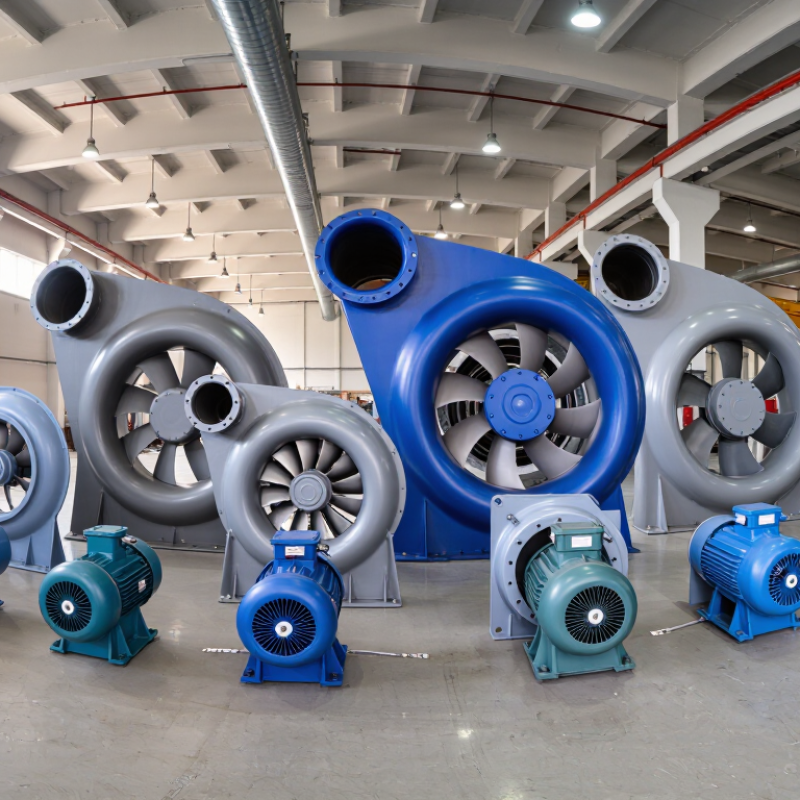
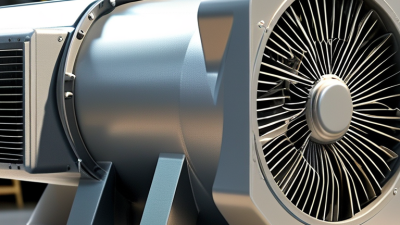
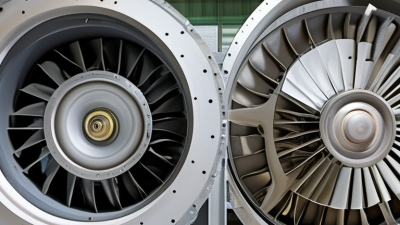
A centrifugal fan moves air by turning it through a rotating impeller. Air enters near the center, or eye, of the wheel. The blades then accelerate it outward by centrifugal force. A spiral-shaped housing collects this air and converts part of its velocity into useful pressure.
The process is simple, but the details matter. A motor drives the impeller at a controlled speed. Blade shape, wheel diameter, and rotation speed affect airflow and pressure. The fan can push air through ducts, filters, heat exchangers, or dusty work areas. Unlike an axial fan, it usually handles higher system resistance more effectively.
Real installations are less tidy than diagrams suggest. A sharp duct bend near the inlet can create turbulence and reduce performance. A blocked filter may also make a correctly sized fan appear weak. Noise, vibration, temperature, and maintenance access deserve attention too. An oversized fan may waste energy, while an undersized one may never reach the required airflow. This is where selection becomes imperfect: catalog figures often describe clean test conditions, not every working site. Check the fan curve against the actual system resistance, and allow room for pressure losses that are easy to underestimate.
A centrifugal fan draws air into the center of an impeller, accelerates it by rotation, and redirects it radially through a volute or discharge housing. The table below compares commonly used centrifugal-fan configurations for international projects. Performance figures are typical engineering selection ranges and vary with impeller diameter, speed, air density, system resistance, and operating conditions.
| No. | Centrifugal Fan Type | How It Works | Typical Airflow Range | Typical Pressure Range | Typical Efficiency | Best-Fit Applications | Main Advantages | Important Selection Considerations |
|---|---|---|---|---|---|---|---|---|
| 1 | Backward-Curved Fan | Backward-curved blades transfer air from the impeller eye toward the outlet while reducing slip and limiting power rise at high flow. | 1,000–100,000 m³/h | 500–3,000 Pa | 70–85% | HVAC air-handling units, factories, clean-air ventilation, and process-air systems. | High efficiency, relatively quiet operation, and stable performance over a broad operating range. | Specify corrosion protection and filtration when the air contains moisture, dust, or chemicals. |
| 2 | Airfoil-Blade Fan | Aerodynamic hollow or streamlined blades minimize turbulence as air leaves the impeller, producing efficient high-volume airflow. | 5,000–150,000 m³/h | 600–2,500 Pa | 75–88% | Large air-handling systems, tunnels, industrial ventilation, and energy-conscious commercial buildings. | Very good energy efficiency and low noise at design conditions. | The blades are less suitable for abrasive or heavily contaminated air unless protected by upstream filtration. |
| 3 | Forward-Curved Fan | Small forward-curved blades rotate the air in the direction of impeller motion, allowing high airflow from a compact wheel at low pressure. | 500–30,000 m³/h | 100–1,500 Pa | 45–70% | Fan-coil units, compact air-conditioning equipment, furnace systems, and low-pressure ventilation. | Compact size, low initial cost, and strong airflow at relatively low static pressure. | Avoid operation far to the right of the fan curve; motor overload and noise can increase at excessive airflow. |
| 4 | Radial-Blade Fan | Straight blades move air radially outward and provide strong resistance to fouling, making the design suitable for particulate-laden air. | 500–50,000 m³/h | 1,000–5,000 Pa | 50–75% | Dust extraction, woodworking, cement handling, agriculture, and general industrial exhaust. | Robust construction, good fouling resistance, and useful medium-to-high pressure capability. | Use wear-resistant materials or replaceable liners when conveying abrasive solids. |
| 5 | High-Pressure Radial Fan | A reinforced radial impeller increases air velocity and pressure for systems with long ducts, filters, cyclones, or process resistance. | 300–20,000 m³/h | 3,000–15,000 Pa | 45–72% | Pneumatic conveying, combustion air, industrial process lines, and high-resistance dust collection. | High static pressure and durable operation in demanding process systems. | Check motor power, vibration limits, bearing arrangement, and noise because high-speed operation can be demanding. |
| 6 | Plug Fan | A motor-driven impeller operates without a conventional scroll housing; the surrounding air-handling casing guides the discharge flow. | 2,000–120,000 m³/h | 300–2,000 Pa | 65–85% | Modular air-handling units, cleanrooms, data centers, and retrofit ventilation systems. | Space-efficient, flexible installation, and easy integration with variable-speed drives. | The casing must be designed to distribute air evenly; inlet and outlet clearances affect performance. |
| 7 | Double-Inlet Double-Width Fan | Two impeller inlets feed a wide wheel, increasing airflow capacity while keeping the fan height relatively compact. | 10,000–250,000 m³/h | 500–2,500 Pa | 65–82% | Large commercial HVAC plants, factories, underground facilities, and central exhaust systems. | High airflow capacity from one fan assembly and efficient use of plant-room space. | Both inlets need adequate clearance and balanced airflow; shaft alignment and bearing maintenance are important. |
| 8 | Roof-Mounted Centrifugal Exhaust Fan | The impeller extracts air through ductwork and discharges it upward or horizontally above the roof to reduce re-entrainment. | 500–40,000 m³/h | 150–1,500 Pa | 50–75% | Commercial kitchens, warehouses, workshops, laboratories, and general building exhaust. | Saves indoor floor space and provides direct outdoor discharge. | Verify weather protection, roof curb compatibility, wind exposure, condensate drainage, and access for maintenance. |
| 9 | Smoke-Extract Centrifugal Fan | A high-temperature-rated assembly removes smoke and hot gases during a fire event while supporting normal ventilation in approved designs. | 2,000–100,000 m³/h | 500–2,500 Pa | 55–80% | Car parks, tunnels, industrial buildings, atriums, and smoke-control systems. | Designed for safety-critical smoke movement and high-temperature duty when certified accordingly. | Temperature rating, fire-test classification, control-panel requirements, and local building regulations must be verified. |
| 10 | Explosion-Resistant Centrifugal Fan | The fan uses suitable materials, motor protection, electrical equipment, and construction clearances to reduce ignition risk in hazardous areas. | 500–50,000 m³/h | 500–4,000 Pa | 50–78% | Chemical plants, paint facilities, fuel-handling areas, laboratories, and other classified locations. | Supports ventilation where flammable gases, vapors, or dust may be present. | Hazardous-area classification, gas or dust group, temperature class, certification, grounding, and motor selection are essential. |